


Onset of Relief: Buspar Versus Benzodiazepines Speed
Imagine panic as a storm; benzodiazepines act like a fast ferry, often reducing acute anxiety within minutes to a few hours.
Buspirone arrives differently: it gently shifts serotonin signaling and usually requires days to weeks before noticeable relief emerges.
Clinically that means benzos for immediate symptom control, buspirone for steady long term management without the same rapid sedation or dependence risk.
| Drug | Typical onset | Notes |
|---|---|---|
| Benzodiazepines | minutes to hours | rapid relief, sedation risk, dependence potential |
| Buspirone | days to weeks | delayed onset, less sedation, lower dependence risk useful for chronic anxiety |
Mechanisms Explained: Serotonin Modulation Versus Gaba Potentiation
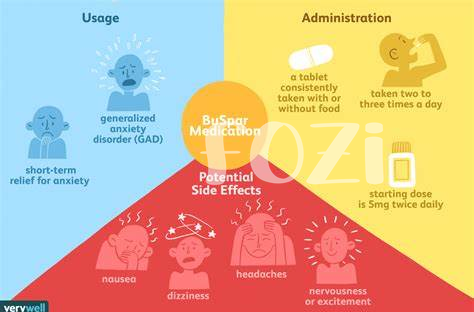
Like a dimmer adjusting mood, buspar targets serotonin receptors (notably 5‑HT1A) to gently recalibrate anxiety circuits. Its modulation slowly reshapes signaling, lowering chronic worry over days to weeks with minimal sedation or cognitive dulling.
By contrast, benzodiazepines potentiate GABA‑A transmission, producing a rapid, robust calming effect that can feel like an off switch for anxious arousal. That immediacy helps acute distress but brings greater sedation, memory impairment, and risk of tolerance and withdrawal; clinicians weigh speed against safety when choosing therapy and individual patient goals and history guide the choice.
Side Effect Profiles Compared: Sedation, Cognition, and More
A patient arrives anxious and hopes for relief; their experience often hinges on which drug is chosen. Benzodiazepines usually deliver rapid calming and marked sedation, while buspar produces subtler, slower onset anxiety reduction with less immediate drowsiness.
Sedation and psychomotor slowing are prominent with benzodiazepines, often impairing driving, attention, and short term memory. By contrast, buspar is associated with minimal sedation and fewer cognitive effects, though patients may report dizziness, headaches, or nausea.
Over weeks to months benzodiazepines can produce tolerance, worsening daytime somnolence and risk of falls, especially in older adults. Cognitive blunting and memory problems can persist with long term use, whereas buspar carries lower dependence potential and a milder cognitive burden.
Decisions.
Dependence and Withdrawal Risks: Short-term and Long-term

Imagine waking after weeks of relief only to face shaking and insomnia; benzodiazepines can produce that abrupt rebound because physical dependence often develops within weeks. Buspar, by contrast, rarely causes physiological dependence, so short-term cessation usually leads to minimal withdrawal symptoms for most patients.
Over months and years the story diverges: benzodiazepine tolerance can require escalating doses and creates a meaningful risk of long-term dependence, complicating attempts to stop. Buspar’s mechanism avoids the same tolerance pattern, making long-term discontinuation generally gentler, though some patients may experience return of baseline anxiety.
Clinicians recommend slow, supervised tapering for benzodiazepines to reduce risk; transitioning to buspar or adding psychotherapy supports safer long-term anxiety management and personalized follow-up care.
When to Choose Buspar over Benzodiazepines
In practice, pick buspar when anxiety is chronic, non-emergency, and you want minimal sedation or cognitive slowing. Its gradual onset suits people willing to wait for steady improvement, especially when avoiding driving impairment, daytime drowsiness, or interference with work. Patients with history of substance misuse or long-term therapy needs often benefit from buspar’s lower dependence risk.
Choose it alongside psychotherapy, or when tapering benzodiazepines is planned, because buspar can support anxiety control without reinforcing sedative pathways. It’s less useful for panic attacks or severe acute agitation where benzodiazepines act fast; in those cases short-term benzo use with clear exit strategy may be preferable. Discuss goals, timeline, comorbid depression, and medication interactions with clinicians to match treatment to lifestyle and safety priorities. Elderly patients or those with complex polypharmacy often tolerate buspar better, reducing hospitalization and functional decline gradually over time.
| Factor | Prefer buspar if... |
|---|---|
| Dependence risk | History of substance misuse or long-term therapy |
| Need for rapid relief | Not urgent; can wait weeks |
| Sedation concerns | Must avoid daytime drowsiness (e.g., driving, work) |
Practical Prescribing Considerations and Patient-centered Decision Factors
Start by matching treatment to clinical goals: rapid symptom control favors short-term benzodiazepines, while chronic anxiety management generally points toward Buspirone and psychosocial interventions as first-line options with careful monitoring.
Consider comorbid PTSD, depression, substance use, elderly status, pregnancy, and hepatic impairment: benzodiazepines risk misuse and falls, whereas Buspar suits those with substance concerns but demands weeks for efficacy often.
Review current medications and alcohol use to avoid dangerous interactions: adjust dosages for renal or hepatic dysfunction, plan benzodiazepine tapers when stopping, and schedule regular follow-ups with patients.
Engage patients in shared decision-making: explain onset expectations, side effects, dependence risks, and align treatment with daily functioning, preferences, and measurable goals documented in the care plan.